Ram Navami 2027 falls on Thursday, 15 April 2027 — the birthday of Lord Rama, and the final day of Chaitra Navratri. If you’re counting down, the live timer near the top of this page tracks the remaining days, hours, minutes and seconds automatically. There’s nothing to install or sign up for: type “Ram Navami 2027”, set the date to 15 April 2027, and it starts ticking in your browser.
That’s the quick answer. If you’ve seen a calendar that says Wednesday, 14 April, you’re not misreading it — there’s a real reason for the split, and this article explains it, along with the 2027 puja time, the story behind the festival, how Ayodhya celebrates it, and what to know if you’re planning to be there.
The short answer — and why some calendars say 14 April
Most of India will observe Ram Navami on Thursday, 15 April 2027. That includes the temples run by ISKCON and the Vaishnava tradition generally. The Smarta tradition, which follows the tithi strictly, places it on Wednesday, 14 April.
The reason is the Navami tithi itself. Ram Navami isn’t tied to a fixed calendar date — it falls on the navami (ninth) tithi of the bright half (Shukla Paksha) of the month of Chaitra. In 2027, that tithi starts on the afternoon of 14 April and runs into the early afternoon of 15 April (IST). The two traditions resolve the overlap differently: one takes the day the tithi begins, the other takes the day it covers the midday puja. That’s why drikpanchang.com lists both — Smarta Ram Navami on the 14th and Vaishnava Ram Navami on the 15th.
If your family follows a particular panchang, follow that. For most practical purposes — booking travel, taking the day off — Thursday 15 April is the date the majority observe.
When to do the puja: the Madhyahna window
Tradition holds that Rama was born at midday, so the main puja of Ram Navami is done during Madhyahna — the middle portion of the day, roughly two hours on either side of noon. It’s the one part of the day’s timing that all the calendars agree on, even when they disagree about the date.
The exact birth moment for 2027 lands at about 12:20 PM IST, according to two calendar guides I cross-checked (bhaktimeshakti.com and shrimahalaxmicalendar.com put it within a minute of each other). A comfortable window for the day’s puja is late morning through early afternoon — around 11 AM to 2 PM in most of India.
One caveat worth knowing: Madhyahna is calculated from your local sunrise and sunset, not from clock time. It shifts by a few minutes from city to city. If you want it precise, confirm the muhurat in your local panchang the week of the festival — the broad window above is right for everyone, the exact minute is local.
The home puja itself is simple compared to bigger festivals. Devotees typically bathe early, set up an image or murti of Rama (often with Sita, Lakshmana and Hanuman), chant Rama mantras or verses from the Ramayana, offer naivedya — panakam, the jaggery-water drink, is traditional in the South — and many fast until after the midday puja before eating once, satvik food only.
The story the festival comes from
Ram Navami marks a birth, and the birth story is one of the most told in India. As the Valmiki Ramayana’s Bala Kanda narrates it, King Dasharatha of Ayodhya had everything a king could want except an heir. On the advice of his sages, he performed the putrakameshti yajna, a fire ritual for the sake of a son. From the sacrificial fire emerged a divine being carrying a bowl of payasam — sweetened rice pudding — which the king divided among his three queens.
Kaushalya gave birth to Rama on the Navami tithi of Chaitra, under the Punarvasu nakshatra. Kaikeyi bore Bharata, and Sumitra bore the twins Lakshmana and Shatrughna. Rama grew up to be worshipped as Maryada Purushottam — literally, the perfect man who never crossed the bounds of dharma: the ideal son who honoured his father’s word even at the cost of his throne, the ideal husband, brother and king.
That’s why Ram Navami has a slightly different flavour from festivals like Diwali. The celebration is inseparable from Rama’s conduct. Sermons and discourses on the day return to the same point: the birth is worth marking because of the life that followed.
How the day is actually celebrated
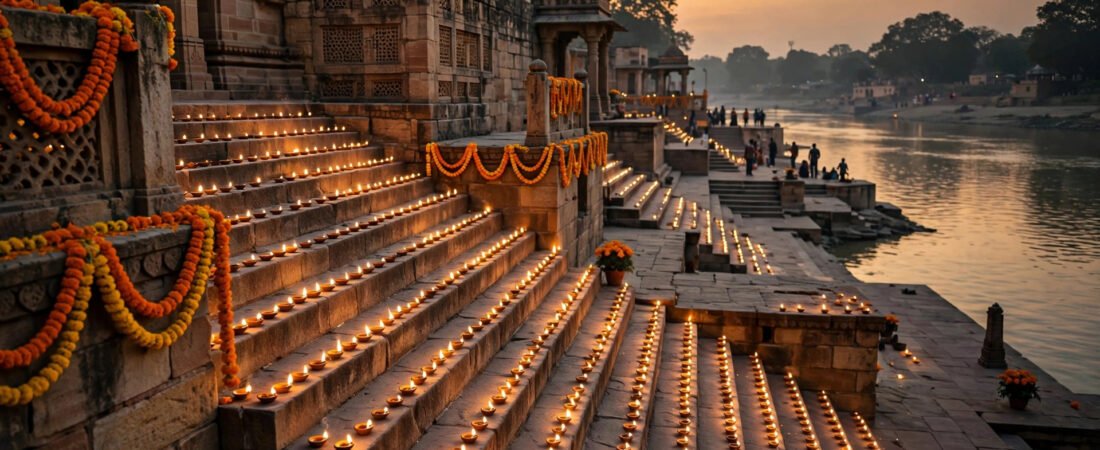
The centre of the country’s celebrations is, naturally, Ayodhya. On Ram Navami, the city draws enormous crowds — lakhs of devotees — to its temples, especially Kanak Bhawan, and to the banks of the Sarayu, where a ritual dip is considered especially meritorious. Temple processions carry the murtis of Rama, Sita, Lakshmana and Hanuman through streets lined with flower petals, and the day’s chanting runs from dawn well past dark.
Across the border, Janakpur in Nepal — Sita’s birthplace — holds one of the largest celebrations outside India, with pilgrims arriving from both countries for the joint worship of Rama and Sita. And in countless temples everywhere else, the nine days of Chaitra Navratri build to a finish on Navami: the akhand path, a continuous nine-day recitation of Tulsidas’s Ramcharitmanas, concludes, kirtans fill temple courtyards, and in some cities shobha yatras (festive processions) take over main roads.
At home, the pattern is quieter. Homes are cleaned and lit with diyas, families gather for the midday puja, many observe a fast — often just until after the puja, with a single satvik meal — and the evening is for reading or listening to the story of Rama’s birth.
Ram Navami is the finale of Chaitra Navratri
One thing that surprises people who are new to the festival: Ram Navami isn’t standalone. It’s the ninth and final day of Chaitra Navratri, the nine-night festival at the start of the Hindu new year, dedicated to the worship of Goddess Durga — and, in this season, of Lord Rama too.
The sequence is what gives the festival its buildup. Navratri opens with Ghatasthapana (the kalash installation, around 7 April in 2027), devotees fast and do daily puja through the nine days, and the Navami closes it. In the same week, much of India also celebrates the new year under different names — Gudi Padwa in Maharashtra, Ugadi in Karnataka and Andhra Pradesh. Spring in the Hindu calendar is a crowded season, and Ram Navami is its peak.
Planning a trip to Ayodhya for Ram Navami 2027? Read this first
If you’re thinking of being in Ayodhya on 15 April 2027, plan early — it’s the busiest day of the year there, and our live countdown gives you an honest sense of how fast the window is closing.
Ayodhya Dham station is well connected by rail from Delhi, Lucknow, Varanasi and Prayagraj, and the city now has its own airport (Maharishi Valmiki International Airport), with Lucknow as the bigger fallback about 135 km away. Trains and flights for the festival window sell out well in advance, so book transport first and work backwards from there. Hotels and dharamshalas in the city fill up too — reserve a room before you reserve anything else.
A word on the weather: mid-April in eastern Uttar Pradesh is properly hot. Temperatures routinely push past 38°C, and you’ll be on your feet in the sun for much of the day. Carry water, wear a cap, and plan temple visits for the morning and late afternoon. If you’re travelling with elderly parents, pick accommodation close to the temple zone — the crowds make long walks unavoidable otherwise.
Frequently asked questions
Should I observe Ram Navami on 14 or 15 April 2027?
Follow your family’s tradition. Most temples, and the Vaishnava/ISKCON calendars, observe Thursday 15 April; the Smarta tradition observes Wednesday 14 April. Both trace back to the same Navami tithi, so neither is wrong.
What exactly is Madhyahna, and why does the puja happen then?
It’s the middle portion of the day — roughly two hours either side of noon — because tradition says Rama was born at midday. It’s computed from local sunrise and sunset, so the precise minutes vary by city.
Is Ram Navami a public holiday in India?
Yes, it’s a gazetted holiday. Government offices and banks are closed in most states, and it’s observed as a restricted or public holiday in the rest.
When was Ram Navami in 2026, and when is it in 2028?
In 2026 it fell on 26 March, and in 2028 it’s on 3 April — the date shifts each year because it follows the lunar tithi, not the solar calendar.
What do people eat during the Ram Navami fast?
Satvik food — no meat, no alcohol, and for many no onion or garlic. Those who fast typically eat once, after the midday puja. Panakam (jaggery water) and kosambari are common prasad in the South.
Why is it called Navami?
Because it falls on the navami — the ninth tithi — of the bright fortnight of Chaitra. The name is the date.
Wrapping up
Ram Navami 2027 is Thursday, 15 April — a spring birthday for one of Hinduism’s most loved figures, closing out nine days of Chaitra Navratri. Whether you’re fasting at home, following the puja from abroad, or standing in the crowds at Ayodhya, set the live countdown and let it tick down to the second. And if you’d like company for the wait, our Eid al-Fitr 2027 countdown lands just over a month earlier, and our Holi 2027 countdown covers the festival that opens the same season.