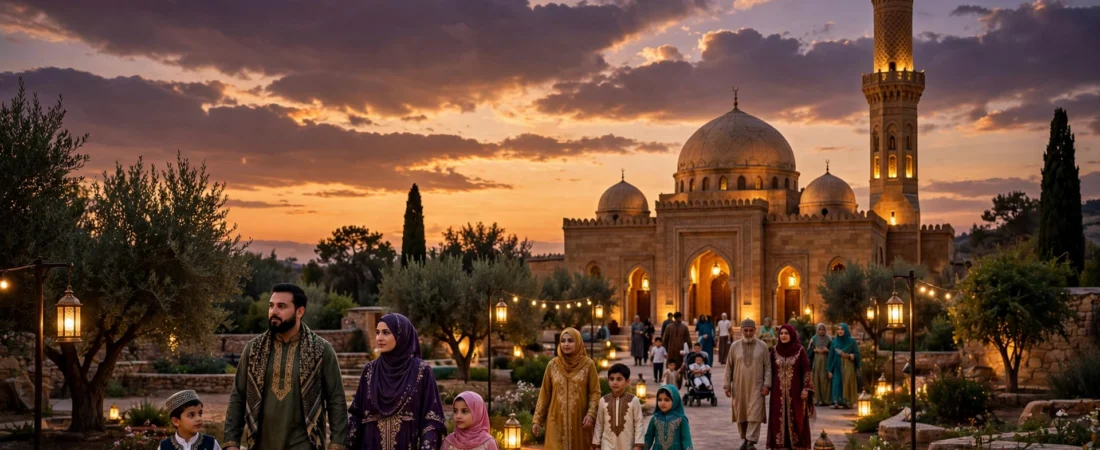
There’s a particular restlessness in the last week of Ramadan. The fasting days have built their own rhythm — suhoor alarms, slow afternoons, the noisy relief of iftar — and everyone starts watching the sky. Because the exact date of Eid al-Fitr 2027 isn’t printed on anyone’s wall calendar yet. It’s decided by a sliver of moon.
So, how many days until Eid al-Fitr 2027? The widely expected date is Wednesday, 10 March 2027 — 1 Shawwal 1448. That’s roughly five months from mid-October 2026. But read on before you lock in travel plans, because that Wednesday comes with a genuine, astronomical asterisk.
Wednesday, 10 March 2027 — with one honest asterisk
Every major holiday calendar that projects Islamic dates into 2027 converges on the same answer: Eid al-Fitr falls on Wednesday, 10 March 2027. Seven independent sources — timeanddate.com, publicholidays.mu, publicholidays.africa, banglasun.com, timeoutabudhabi.com, gulftalent.com, and Wikipedia’s “2027 in Morocco” entry (which cites timeanddate) — all agree. Wednesday 10 March is the consensus.
The asterisk: Islamic months begin with the sighting of the new crescent moon, the hilal. The Shawwal crescent will be sought on the evening of Monday, 8 March. If it’s clearly visible then, Eid falls on Tuesday, 9 March — Ramadan was 29 days. If it isn’t — clouds, haze, a moon that sets too early — Ramadan gets a 30th day and Eid moves to Wednesday, 10 March, which is the date every major projecting calendar currently converges on. And in South Asia, where India, Pakistan and Bangladesh go by their own local sightings, the announcement can land a day later still: Thursday, 11 March is genuinely on the table there. Treat the 10th as the strong favourite, not a contract.
Why the date can still move
Ramadan is either 29 or 30 days long, and nobody can announce Eid until observers have looked for the Shawwal crescent on the 29th evening. Saudi Arabia’s moon-sighting committee makes the call that most of the Gulf, much of Europe and North America follow. But India, Pakistan and Bangladesh frequently celebrate a day later than Saudi Arabia — not because they disagree about the moon, but because their local evening falls earlier in the global cycle, so the crescent often isn’t yet visible to them when it’s visible from Riyadh.
Meanwhile, Saudi Arabia also publishes the calculated Umm al-Qura calendar, which projects dates astronomically years ahead. The 10 March date comes from that calculation. Calculations get it right most of the time — but when they don’t, the visual sighting wins. This is why you’ll sometimes see Eid celebrated on two different days in the same country: different mosques following different authorities. It’s normal. It’s been like this for centuries.
The night before: Chand Raat
Eid actually starts the evening before, on what’s called Chand Raat — “moon night.” Families step out onto rooftops and balconies to spot the crescent; in India and Pakistan this is almost a competitive sport, with neighbourhood WhatsApp groups lighting up the moment someone confirms a sighting. Girls get henna (mehndi) applied in elaborate patterns, markets stay open late for last-minute bangle and sweet shopping, and kitchens start the prep — soaking vermicelli, rolling maamoul dough — so Eid morning runs on rails.
What Eid morning actually looks like
Eid day starts early and hungry — but that’s the point. After a month of pre-dawn suhoor, breakfast on Eid morning is itself a celebration. Many families begin with an odd number of dates, a small sunnah tradition, then a full ritual bath, the ghusl, and their best or newest clothes. New outfits for Eid aren’t vanity; the day is meant to look and feel like a renewal.
Then comes the Eid prayer, held in mosques and, weather permitting, in vast open prayer grounds called musallas. The congregation recites the takbeer — “Allahu Akbar” — on the way there, and the prayer itself is short: two rak’ahs followed by a sermon, ending with rows of worshippers turning to embrace the people beside them. Eid Mubarak, repeated a hundred times over.
One thing happens before any of this, though. Zakat al-Fitr — a mandatory charity contribution, traditionally enough food to feed a person for a day — must be paid before the Eid prayer. The logic is simple and beautiful: no one in the community should sit out the feast because they’re broke. It’s charity with a deadline, and the deadline is the prayer.
The food, the visits, the Eidi
After prayer, the day belongs to family. The table tells you where you are. In India and Pakistan it’s sheer khurma — vermicelli simmered in milk with dates and nuts — plus sevaiyan and biryani. In the Levant and Turkey it’s baklava and maamoul, the date-stuffed shortbread. In Indonesia, where the festival is called Lebaran, it’s ketupat rice cakes and beef rendang. In Morocco, harira soup and tagines. Nearly 2 billion people celebrate Eid, so “Eid food” is really a hundred cuisines sharing one date on the calendar.
Children are the day’s undisputed winners. Adults hand out Eidi — crisp banknotes or small gifts — and kids keep a running tally all day. Between the gifts, there’s a duty roster of visits: elders first, then neighbours, then friends. Many families also visit graves, laying flowers for those who aren’t at the table this year. The day is joyful, but it makes room for remembering.
Eid al-Fitr isn’t the only Eid
A common mix-up, worth clearing now: there are two Eids. Eid al-Fitr marks the end of Ramadan. Eid al-Adha — the Festival of Sacrifice — comes about ten weeks later, on the 10th of Dhul Hijjah, at the close of the Hajj pilgrimage. If you hear someone say “Eid” without qualification in March 2027, they mean al-Fitr. If it’s around May, they mean al-Adha. Two different festivals, two different stories.
Where Eid is a public holiday — and where it isn’t
In the Gulf states, Egypt, Malaysia, Turkey and Indonesia, Eid al-Fitr means multiple days off — Indonesia’s Lebaran break can stretch to a full week, with the great mudik homecoming emptying the cities. In India, Eid is a gazetted central-government holiday (though the exact date each year is confirmed by moon sighting, so state holiday lists sometimes carry both candidate dates).
In the UK, the US and most of Europe, Eid isn’t a public holiday at all — though many employers and schools accommodate it, and it’s worth asking early. One practical note if you’re travelling: flights to and hotel rooms in Muslim-majority countries book out fast around Eid, and prices spike. If you’re planning a March 2027 trip to Dubai, Istanbul or Kuala Lumpur, the cheap seats are the ones bought in 2026.
Want the live number ticking down second by second? Set a free countdown for 10 March 2027 — and our countdown-timer guide shows how to generate a share link so the whole family watches the same clock.
Frequently asked questions
When is Eid al-Fitr 2027?
Wednesday, 10 March 2027 is the consensus date, subject to the Shawwal moon sighting. If Ramadan runs only 29 days, Eid could begin Tuesday, 9 March; parts of South Asia that sight the moon a day late may observe it Thursday, 11 March.
Why do different countries celebrate Eid on different days?
Because the Islamic month begins with a local crescent-moon sighting. The moon becomes visible at different times in different longitudes, and some authorities follow calculated calendars while others require a visual sighting — so announcements can legitimately differ by a day.
What is Zakat al-Fitr?
A mandatory charitable contribution paid before the Eid prayer — traditionally enough staple food to feed one person for a day — so that the poor can celebrate too.
How long does Eid al-Fitr last?
The religious celebration is one day, but public holidays run one to three days in most countries, and up to a week in Indonesia.
Is Eid al-Fitr a public holiday in India?
Yes — it’s a gazetted central-government holiday, though the confirmed date is announced after the moon sighting, so official lists sometimes show both candidate dates.
How is Eid al-Fitr different from Eid al-Adha?
Eid al-Fitr ends Ramadan and centres on the breaking of the fast; Eid al-Adha comes about ten weeks later at the end of the Hajj and centres on sacrifice and distribution of meat.
Eid al-Fitr 2027 lands on Wednesday, 10 March — give or take a moonrise. That’s roughly five months of anticipation from mid-October 2026, plenty of time to plan the visit, the feast and the Eidi budget. Start the live countdown, set it for March 10, and let the timer do the watching-the-sky for you.