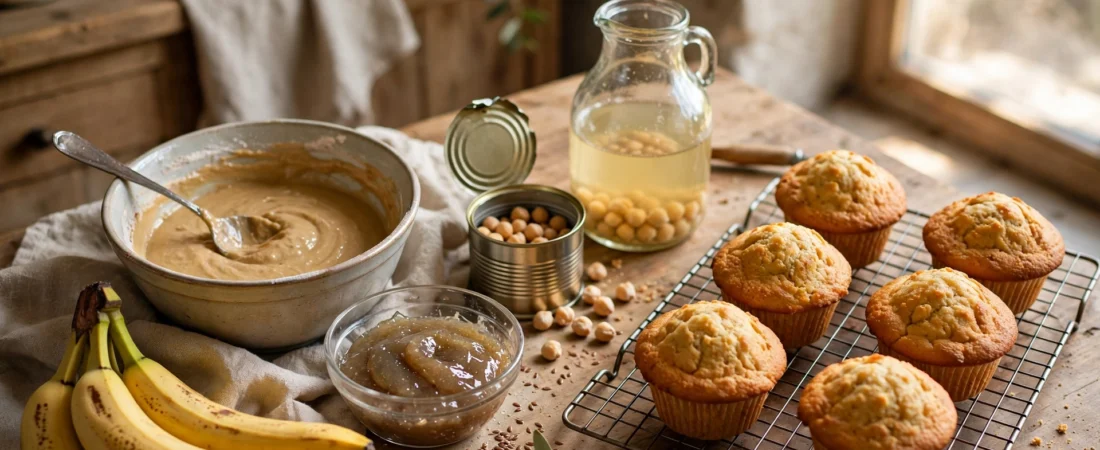
You open the cupboard, the recipe says three eggs, and the box is empty. An egg substitute in baking can save the afternoon, but only if you pick the right one. A swap that holds brownies together can turn a sponge into a brick, and one that lifts a sponge can leave cookies flat. The trick is matching the swap to the job the egg was doing in that recipe.
What the egg was actually doing in your recipe
A large egg weighs about 50 grams, roughly three-quarters water. In most baking it does two or three jobs at once: it binds dry ingredients so the crumb holds together, it traps air and helps the batter rise, and it adds moisture and richness from the yolk. A chewy cookie mostly needs binding; a Victoria sponge mostly needs lift; a rich pound cake leans hard on the yolk’s fat.
So before you reach for anything, ask one question: what would go wrong without the egg here? If the batter would crumble, you need a binder. If it would stay flat, you need lift. If it would dry out, you need moisture. Pick the swap that covers the missing job and you’ll get much closer on the first try.
The 8 swaps at a glance
- Flax egg: 1 tablespoon ground flaxseed + 3 tablespoons water, rested 5 to 10 minutes until gelled. Best for cookies, muffins, brownies and pancakes.
- Chia egg: 1 tablespoon chia seeds + 3 tablespoons water, rested 10 to 15 minutes. Best for muffins, quick breads and sturdy cookies.
- Unsweetened applesauce: 1/4 cup per egg. Best for muffins, brownies and spice cakes.
- Mashed ripe banana: 1/4 cup, about half a medium banana, per egg. Best for banana bread, pancakes and spiced loaves.
- Aquafaba: 3 tablespoons chickpea liquid per whole egg, 2 tablespoons per egg white. Best for meringues, light sponges and anything whipped.
- Silken tofu: 1/4 cup blended smooth per egg. Best for dense cakes, brownies and custardy bakes.
- Commercial egg replacer: follow the packet, usually 1 to 2 teaspoons powder + 2 to 3 tablespoons water per egg. Best for everyday cakes and muffins when you want consistency.
- Baking soda + vinegar: 1 teaspoon baking soda + 1 tablespoon vinegar per egg. Best for light cakes and cupcakes, paired with a moist ingredient.
Flax eggs and chia eggs: the work horses
If you bake egg-free more than once, ground flaxseed will earn its shelf space fast. Stir a tablespoon of ground flax into three tablespoons of water, leave it five to ten minutes, and it turns into a thick gel that sticks crumbs together the way egg white does, without much flavour of its own. There’s a faint nuttiness, which suits wholemeal muffins and disappears under chocolate.
Chia does the same job with a slightly sturdier gel, needing ten to fifteen minutes. Grind the seeds first if you don’t want specks in a pale cake. Both shine in recipes calling for one or two eggs; push past that and the crumb gets heavy, because neither adds lift. A flax egg in a muffin is a quiet success. A flax egg in an angel food cake is a lost cause.
Keep ground flax in the fridge once it’s open. Stale flax tastes dusty, and that taste survives baking.
Applesauce and mashed banana: moisture first, binding second
A quarter cup of unsweetened applesauce replaces one egg in a muffin, brownie or spice cake, and it’s the swap most people already have in the cupboard. It keeps the crumb soft for days, which suits snack cakes that dry out. What it doesn’t do is bind strongly or lift at all, so add a quarter teaspoon of baking powder per egg replaced. Skip that and a cake made with applesauce alone can bake up squat and gummy in the middle, especially past two eggs.
Mashed banana plays the same role with a louder flavour. Half a ripe banana, mashed smooth, is roughly a quarter cup, and it brings sweetness with the moisture — perfect in banana bread, pancakes and ginger cake, a poor choice for vanilla sponge or lemon drizzle, where the banana note elbows everything else aside. Banana also browns faster, so check a banana-swapped bake five minutes early; the top can look finished while the centre is still soft.
Both are moisture swaps, not structural ones. In a dense, forgiving bake that’s exactly what you want; in a bake that needs to stand tall, pair them with something that binds or lifts.
Aquafaba: the one that whips
Aquafaba is the liquid from a tin of chickpeas, and yes, it really does whip into stiff peaks. Three tablespoons replaces a whole egg; two tablespoons replaces one egg white. Whipped with a pinch of cream of tartar, it makes meringues, pavlova and macarons that would be impossible with any fruit puree or seed gel. Unwhipped, it still binds and moistens, so it works in cookies and light sponges too.
A few details decide whether the foam holds. Use liquid from unsalted chickpeas, and reduce it by a third over low heat if it looks thin; good aquafaba should coat a spoon like egg white. Whip it in a clean, grease-free bowl, because a trace of oil stops the peaks forming, and get it into the oven promptly — it deflates faster than egg white.
If you make hummus or chickpea curry regularly, aquafaba is free. Tip the tin over a jug instead of down the sink, and it keeps in the fridge for up to a week.
Silken tofu, commercial replacer, and baking soda with vinegar
Silken tofu sounds like an odd baking ingredient until you try it in a brownie. Blend a quarter cup smooth per egg and it disappears into chocolate batter, adding moisture and a dense, fudgy structure without any beany taste. It suits rich, dense bakes far better than light ones, and it needs blending: lumps of tofu in a cake are not a texture anyone asked for. In a cheesecake-style bake or a dense chocolate cake, it’s one of the most reliable swaps here.
A commercial egg replacer, usually starches and raising agents, is the least exciting option and often the most consistent. Follow the packet ratio and you’ll get a predictable result in everyday cakes and muffins. It won’t whip like aquafaba, but for a family sponge on a school night, predictable beats clever.
Baking soda plus vinegar is the lift specialist: a teaspoon of soda with a tablespoon of vinegar per egg gives a burst of carbon dioxide as the batter hits the heat, which suits light cupcakes and sponges. On its own it binds nothing, so use it alongside applesauce, banana or tofu rather than instead of them.
How many eggs can you swap?
One or two eggs is straightforward: at that level the egg is a supporting player, so a good swap changes the texture slightly without collapsing the bake. Three eggs is the practical limit for most home recipes, and even then you’ll want to combine a binder with a lift, or switch to aquafaba or a commercial replacer. Past three eggs, the egg is often the structure itself — a souffle or a traditional pound cake leans on eggs so heavily that swapping them all out produces something different from the original, however tasty. That’s a sign the recipe needs a version written egg-free from the start, not a patched one.
When swapping two or three eggs, keep notes. If a tin comes out dense, the fix next time is usually a quarter teaspoon more baking powder per egg, or a binder swap instead of a puree swap.
Three bakes, three swaps
Take a tray of chocolate brownies. The eggs there mostly bind and moisten, and the batter is already dense and rich. A flax egg works beautifully, and applesauce works too, giving a softer, cakier brownie. Either way, nobody at the table will ask what happened to the eggs.
Take banana muffins. The eggs bind a wet batter that already has plenty of moisture, so a chia egg earns its keep: the gel holds the crumb without adding liquid, and the muffins don’t go soggy. Applesauce on top of wet banana batter is the common mistake here, and it’s how muffins end up gummy.
Take a light vanilla sponge, the hard one, because the eggs are doing lift, binding and richness at once. Aquafaba, whipped, is the strongest choice, or a commercial replacer if you’d rather not fuss with a whisk. Flax or banana alone will give you a flat, dense cake that tastes fine and looks apologetic.
Mistakes that ruin an egg-free bake
The most common error is swapping by habit instead of by job: applesauce in a meringue, flax in a souffle, banana in a lemon cake. Each swap is fine somewhere else and wrong here. The second is over-swapping — four eggs replaced with applesauce gives you a wet batter that never sets in the middle. The third is forgetting knock-on effects. A sweet swap like banana means you can often cut the sugar by a tablespoon or two; a fat-free swap like aquafaba means a rich cake may need a tablespoon of oil to stay tender. And if a swap adds no lift, check the baking powder: if the tin’s been open since last winter, no substitute will save the rise.
Taste before you commit. A spoonful of batter tells you more than any chart, and it’s far easier to adjust in the bowl than after the timer goes off.
Frequently asked questions
What is the best egg substitute for baking in general?
For most everyday baking, a flax egg. It’s cheap, neutral-tasting and reliable in cookies, muffins, brownies and pancakes, as long as the recipe calls for one or two eggs.
Can I replace 3 eggs with applesauce?
You can, but the result will be dense and moist rather than light. For three eggs, aquafaba or a commercial replacer usually holds the structure better, or pair applesauce with extra baking powder.
Does aquafaba taste like chickpeas?
Not once it’s baked. Whipped aquafaba can smell faintly beany in the bowl, but that note bakes off, and in meringues and sponges you won’t taste it at all.
Can I use egg substitute in a cake mix?
Yes. Replace each egg in the mix with your chosen swap at the same ratios above, and add a quarter teaspoon of baking powder per egg if you’re using a puree swap like applesauce or banana.
Is a flax egg the same as a chia egg?
Nearly. Both use one tablespoon of seed to three tablespoons of water per egg, but chia gels thicker and takes longer, and it can leave visible specks unless you grind it first.
Do egg substitutes work for cookies?
Cookies are the most forgiving bake of all. Flax, chia, applesauce and aquafaba all work, with flax giving the chewiest result and applesauce the softest, cakiest one.
A swap for every bake, not one swap for everything
No single egg substitute wins every bake, and that’s the useful part. Once you know whether a recipe needs binding, lift, moisture or richness, the choice stops being a gamble. Keep ground flax in the fridge for everyday muffins and cookies, save the chickpea liquid for light cakes and meringues, and reach for applesauce or banana when a dense, moist crumb is what you want. If you’re hunting for another ingredient swap, try our free substitute finder, and our buttermilk substitute guide covers five dairy options the same way. When a recipe needs scaling as well as swapping, our guide to scaling a recipe up or down keeps the maths straight.
Start with one egg, one swap, and a recipe you already know well. That first successful bake tells you more than any list.