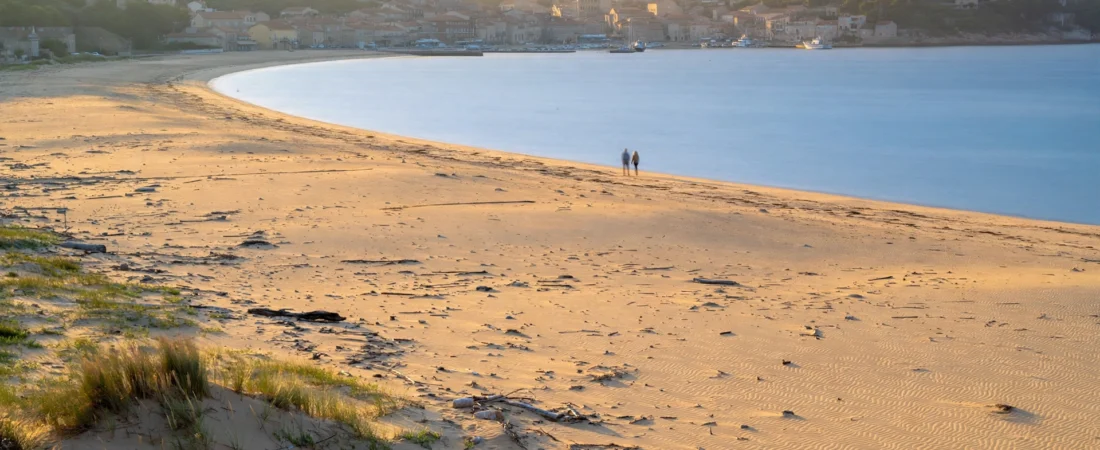
There’s a particular kind of holiday disappointment that has nothing to do with the weather. You arrive somewhere you’ve wanted to see for years, and you spend most of the day shuffling along in a slow-moving queue of strangers, all taking the same photo. Learning how to avoid crowds on holiday isn’t about finding secret places nobody knows. It’s mostly about timing — picking the right week, the right day, and the right hour, and then sticking to that plan when everyone else drifts towards midday.
None of these tricks requires a bigger budget. Some of them will actually save you money. They do ask for a bit of flexibility, and one of them asks for an early alarm. That’s the trade, and it’s usually worth it.
1. Shift your trip by two weeks, not two months
Most people hear “travel off-season” and picture a beach in February, cold and half-shut. You don’t need to go that far. Shifting a trip by just two or three weeks either side of peak season often does most of the work.
Take the Greek islands. Late August is packed, pricey, and hot enough to make sightseeing feel like a chore. Mid-September is a different trip: the sea is still warm from the summer, the tavernas are still open, and the ferry queues have thinned out. The same pattern holds in the other direction. A city break in Rome in late May beats July on every measure that matters — shorter lines at the Colosseum, tables you can actually get at dinner, and weather you can walk around in.
The trick is finding the real shoulder window for your specific destination, because it isn’t the same everywhere. School holidays drive it more than weather does. In the UK, the last week of August is peak; the first week of September, when English schools are back, is suddenly quiet even though nothing about the weather has changed. Our free quiet week finder scores every week of the year for exactly this reason, weighing school holidays and public holidays in the UK, US, India, Australia, Germany and France, so you can spot the dip rather than guessing at it. If you’re weighing up dates, that score is a faster starting point than scrolling through a dozen “best time to visit” pages.
One warning: the two weeks before peak are usually a better bet than the two weeks after it. Before peak, everything is gearing up — restaurants, tours and transport are all running at full strength. After peak, places start winding down, and you can arrive to find your first-choice restaurant closed for its annual break.
2. Travel midweek, and fly on the awkward days
Saturday is the worst day to do almost anything on holiday. It’s the day everyone arrives, the day day-trippers pour in, and the day locals head to the same spots you want to see. If you can, build your trip around Tuesday, Wednesday and Thursday.
This shows up in hotel prices too. A Sunday-to-Wednesday stay is often noticeably cheaper than Thursday-to-Saturday in the same hotel, because business travel has wound down and the weekend crowd hasn’t arrived yet. The same logic applies to flights: the 6am departure and the late-evening arrival are unpopular for a reason, and that reason is your advantage. An early flight into a city means you’re at your hotel by 10am, while the Saturday crowd is still at the airport.
Walk around Venice on a Tuesday morning in October and you’ll share the side streets with delivery boats and schoolchildren. Do the same on a Saturday in August and you’ll share them with several thousand other people. The buildings haven’t changed. The day has.
3. Be there at opening time, or come back for the last hour
Almost every popular attraction follows the same daily shape. The first hour after opening is calm. Late morning through mid-afternoon is the crush, roughly 11:30am to 3pm. Then there’s a late-afternoon dip, as families head back to hotels and tour groups move on, and often a second quiet window in the final hour or two before closing.
So put your must-see first. If the museum opens at 9am, be in the queue at 8:45am, not wandering over at 11am wondering why the line wraps around the block. At Chichén Itzá, visitors who catch the 8am entry get the site largely to themselves; by 10am the tour buses have arrived and the same stones are shoulder-to-shoulder. The same holds for the Vatican Museums, the Acropolis, and pretty much any big museum with a timed-entry system.
If mornings aren’t your thing, flip it. Arrive late, stay late. Evening entries at museums and observation decks are often much quieter, and the light is better for photos anyway. Just check that the galleries you care about don’t close early — some museums shut individual wings an hour before the building closes, which can catch you out.
4. Check the destination’s calendar, not just your own
This is the mistake that catches even careful planners. You dodge your own country’s school holidays, book a supposedly quiet week, and land in the middle of someone else’s national holiday.
Domestic tourism often drives the crowd more than international visitors do. Golden Week in Japan, the May bank holiday weekends in the UK, and the long public-holiday stretches around Easter in Europe can turn an otherwise ordinary week into the busiest of the year. Festivals do the same: a normally sleepy town can triple in size for a three-day food festival, and hotel prices follow.
Before you book, check three things: the destination’s public holidays, its school holiday dates, and its big annual events. The local tourism board site is the reliable source for all three — better than a generic travel blog that may be two years out of date. If you’re choosing between two otherwise equal weeks, pick the one that avoids both your holidays and theirs. That’s the week the quiet week finder will score highest, and it’s the week you’ll actually enjoy.
5. Book timed tickets, and book the first slot
“Skip the line” gets oversold, but timed entry is a different thing, and it’s genuinely useful. At places like the Uffizi in Florence or the Louvre in Paris, buying a ticket on the door can mean an hour or more in a queue that a pre-booked ticket walks straight past. The ticket itself doesn’t make the galleries empty — but it does buy you the morning, which is the whole point.
Book the first slot of the day, not a mid-morning one. First-slot visitors get the emptiest rooms, and by the time the crowds build, you’ve already seen the headline pieces and can drift to the quieter wings. The same applies to theme parks: the first hour is when the headline rides have short waits, and the smart move is to ride those first and save the shows and wandering for the busy middle of the day.
6. Swap the famous spot for the one next door
You don’t have to skip the famous places. You just don’t have to do all of them, all day, in the order everyone else does them. Most crowded destinations have a second spot, ten minutes away, that delivers 90% of the experience with 10% of the people.
In Paris, the crowds at the Eiffel Tower’s summit are a fact of life; the view from Parc de Belleville, free and rarely busy, is arguably better for photos because the tower itself is in the frame. In Rome, the queue for the Colosseum can eat a morning, while the Forum and Palatine Hill next door — included on the same ticket — are far calmer. On a beach holiday, the main beach by the resort is packed by 10am, while the next cove along, a fifteen-minute walk past the rocks, is often half-empty.
Ask locals, too. Hotel staff and café owners know which days the cruise ships dock, which mornings the school groups arrive, and which viewpoint the tour buses skip. One short conversation can save you a day of queues, and it’s the kind of tip no booking site will give you.
7. Stuck with school holidays? Play the edges
Sometimes you can’t move the week. School holidays, annual leave rotas, and family logistics pin you to the busiest fortnight of the year, and no amount of advice about September helps. You can still dodge the worst of it by playing the edges of each day and each week.
Arrive on the first weekday of the holiday, not the Saturday before it, when everyone else is travelling. Within the trip, do the headline attraction on a weekday morning and save the beach, the markets and the wandering for the weekend, when the day-trippers arrive. Take day trips away from the main hub: if everyone’s in the resort town, the village twenty minutes inland is having a normal Tuesday.
And if you’re trying to stretch the budget at the same time, the cheapest weeks to travel often overlap with the quietest ones — our guide to the cheapest weeks to travel walks through how to find that overlap, and the quietest times to go on holiday covers the same idea from the calendar side. The two usually point at the same dates, which is a good sign you’re onto something.
Frequently asked questions
Can you really avoid crowds in August?
Not entirely, but you can cut them a lot. Go midweek, be at the big sights at opening time, and pick the second week of the school holidays over the first, when the initial rush has thinned. August in a city is also much quieter than August at a beach resort, because city residents leave and the locals’ holidays empty the place out.
Is shoulder season always cheaper?
Usually, but not automatically. Flights and hotels tend to drop by 20–40% outside peak weeks, but a shoulder week that coincides with a local festival or a major event can cost as much as peak. Check the event calendar before you assume the saving is real.
What’s the single best time of day to visit a popular attraction?
The first 60–90 minutes after opening, on a weekday. If that’s impossible, the last hour before closing is the next-best window, as long as the exhibits you want are still open.
Do skip-the-line tickets actually work?
Timed-entry tickets do, because they cap the number of people entering at once and let you walk past the on-the-door queue. A vague “skip the line” upsell with no timed slot is less reliable — read what it actually includes before paying.
How do I find a place’s quiet weeks without researching for days?
Score the weeks rather than reading about them one by one. Our free quiet week finder rates each week 0–100 using school-holiday estimates and public holidays, so the quiet stretches stand out in seconds. Then check the top-scoring weeks against that destination’s event calendar before booking.
Worth the early alarm
Avoiding crowds on holiday comes down to three decisions, made in this order: pick the quietest week you can, pick weekdays over weekends, and pick the first or last hour over the middle of the day. Get those three right and the rest — the timed tickets, the second-choice viewpoint, the odd lunch hour — is just garnish.
It won’t make a famous place empty. But it will turn a day of shuffling in queues into a day where you actually look at the thing you came to see. If you’re still choosing dates, run them through our free quiet week finder first — it takes a minute, and it might save you a week of crowds.