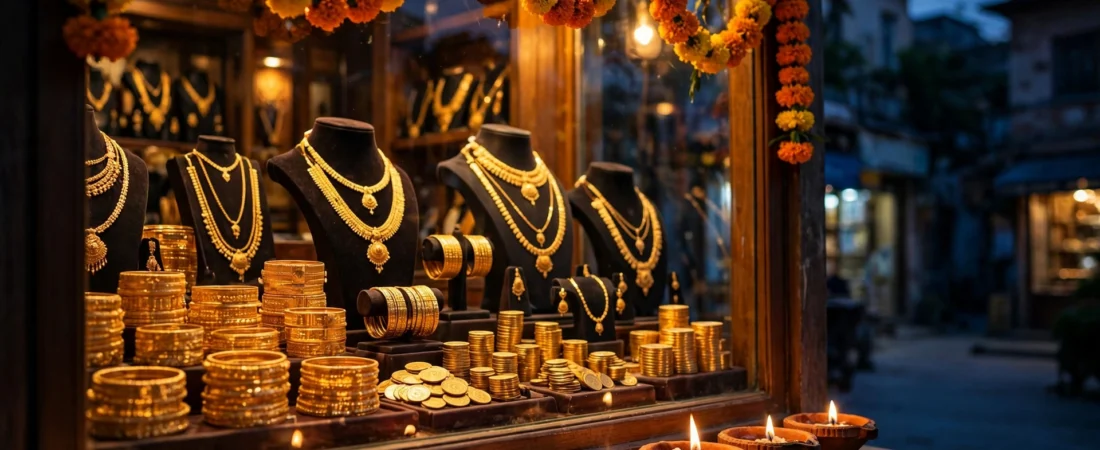
Dhanteras 2027 falls on Wednesday, 27 October 2027 — the day India officially starts its biggest shopping week of the year. Jewellers keep their shutters up past midnight, showrooms run out of their most popular gold coins by evening, and millions of households buy something new — a utensil, a coin, a broom, even a car — because anything purchased on this day is believed to invite Lakshmi, the goddess of wealth, to stay.
The timer below is counting down to it right now, to the second:
Tip: you can open a pre-set timer with one click — https://savehd.app/countdown/#n=Dhanteras%202027&d=2027-10-27 loads Dhanteras 2027 already configured.
When is Dhanteras 2027?
Dhanteras — full name Dhantrayodashi — is observed on the 13th lunar day (Trayodashi) of the waning moon in the month of Kartik. In 2027, that tithi falls on Wednesday 27 October. It’s the first of the six days of the Diwali festival:
- Tuesday 26 October — Vasu Baras (Govatsa Dwadashi)
- Wednesday 27 October — Dhanteras / Dhantrayodashi
- Thursday 28 October — Choti Diwali (Naraka Chaturdashi)
- Friday 29 October — Diwali / Lakshmi Puja, the main night
- Saturday 30 October — Govardhan Puja
- Sunday 31 October — Bhai Dooj, which closes the week
So the festival doesn’t “start” with the fireworks on Diwali night — it starts with the shopping bags on Dhanteras, a full two days earlier. If you’re planning travel, leave requests, or big purchases, the week of 25–31 October 2027 is the one to circle. Our live Diwali 2027 countdown (https://savehd.app/how-many-days-until-diwali-2027/) tracks the main night, and the two articles link to each other for the full week’s picture.
How the 27 October date was fixed
The date isn’t a guess or a carry-over from last year’s calendar. It was cross-checked against Drik Panchang’s 2027 Dhantrayodashi tables for multiple cities, the bhavishyaastro.com five-day Diwali 2027 calendar, and calendartamil.co.in — all of them agree on Wednesday 27 October for India, and the weekday arithmetic checks out. The tithi begins on the evening of Tuesday 26 October and ends on the evening of Wednesday 27 October, which is exactly why the observance lands on the 27th.
One honest caveat: the Trayodashi tithi straddles two evenings, and lunar tithis end at different local times around the world. If you’re in the US, UK, or Gulf and your local panchang shows a shifted evening, go with the muhurat your local temple publishes. For India, 27 October is solid — no regional drift this year, unlike some years when Gujarat or South Indian calendars diverge by a day.
As of mid-October 2026, we’re looking at roughly a year of runway — and the timer at the top of this page counts it down to the second, so you never need to do the maths yourself.
The two stories behind Dhanteras
Dhanteras carries two completely different legends, and most families honour both without noticing the contradiction. That’s Hindu festivals for you — layers, not either/or.
The prince and the serpent. King Hima’s 16-year-old son had a horoscope problem: it predicted he would die of a snakebite on the fourth night of his marriage. His new wife refused to accept it. That night she piled every ornament and coin in the house into a glittering heap at the bedroom door, lit diyas all around it, and kept her husband awake till dawn with stories and songs. When Yama, the god of death, arrived disguised as a serpent, he was dazzled by the lamps and the gold — and charmed by the singing. He sat on the pile listening all night and left at sunrise without taking the prince. That’s why people still light a lamp facing south — Yama’s direction — on Dhanteras night. It’s called the Yamadeepa, and it’s meant to keep untimely death away from the household.
Dhanvantari and the ocean of milk. During the Samudra Manthan — the great churning of the cosmic ocean by gods and demons — Dhanvantari, the divine physician and an incarnation of Vishnu, emerged from the waters carrying a pot of Amrit, the nectar of immortality. He appeared on Trayodashi tithi, which is why the day doubles as Dhanvantari Jayanti — and why the government of India observes National Ayurveda Day on Dhanteras. Some texts add that Lakshmi herself emerged from the same churning, which is the other reason wealth-worship belongs to this day.
So one legend is about outsmarting death with light and gold; the other is about the birth of medicine. Health and wealth, together on one evening. The festival’s logic, once you see it, is impeccable.
What people actually buy on Dhanteras (and why)
“Dhan” means wealth, “teras” means thirteen. The shopping isn’t consumerism grafted onto a festival — the shopping IS the festival. The belief is simple: anything new that enters your home on Dhanteras stays blessed for the year. Gold and silver lead, but the list is much longer than jewellery ads suggest:
- Gold and silver coins and bars — the classic purchase, often embossed with Lakshmi and Ganesha. Many families buy a fixed small weight every year, almost like a ritual savings plan.
- Utensils — steel, brass, or copper vessels are the traditional budget-friendly buy. A new pressure cooker counts just as much as a gold chain.
- Electronics and vehicles — dealerships across India report their single busiest sales day of the year on Dhanteras. Cars get delivered with a marigold garland on the bonnet.
- The humble broom — yes, really. Buying a new broom on Dhanteras is considered auspicious in many households, because it “sweeps out” poverty. It’s probably the cheapest Dhanteras purchase in existence, and it’s completely legitimate.
- Salt and coriander seeds — in Maharashtra, where the festival is called Dhantrodashi, families buy dhana (coriander seeds) and jaggery, pound them together, and offer the mixture as prasad.
The honest truth: the ritual cares about the intention of welcoming something new, not the price tag. If gold isn’t in the budget this year, a steel dabba bought with the right spirit does the job. Nobody’s keeping score except the jewellers.
The Dhanteras evening puja, in practice
The main worship happens after sunset, during Pradosh Kaal — roughly the first two and a half hours after sundown, when the Trayodashi tithi is active. The household puja honours three figures: Lakshmi (wealth), Kuber (the treasurer of the gods), and Dhanvantari (health). In practice, here’s how the evening usually unfolds:
First, the house is cleaned and the entrance decorated — rangoli, marigold torans, and rows of diyas. The new purchases of the day are placed near the puja altar, because they get blessed too. Lakshmi and Kuber idols or pictures are set up, Ganesha is worshipped first (as always, to clear obstacles), then Lakshmi with the Shri Sukta if the family knows it, then Kuber. A ghee lamp is kept burning. And at some point in the evening, one diya is placed outside facing south — the Yamadeepa, for Yama, from the prince’s story.
City-specific muhurat timings for 2027 will be published closer to the date — Drik Panchang’s city pages are the most reliable source, and the evening window is usually generous (an hour or two), so there’s no need to panic about catching an exact minute. What matters more: do the shopping in the daytime, keep the evening free for the puja.
Planning ahead for Dhanteras 2027
Because the date sits a full year out, this is the rare festival article where early planning genuinely pays off:
Gold buyers: jewellers run Dhanteras pre-booking schemes — many let you lock in a rate or reserve specific coin designs weeks ahead. October 2027 prices are unknowable, but the queues on the day are entirely predictable.
Big-ticket purchases: if a car or major appliance is on your 2027 list, dealers start their Dhanteras offers in early October. Booking the delivery for 27 October costs nothing extra and gets you the festive delivery ceremony.
Travel: the 26–31 October week will be peak domestic travel. Trains and flights out of metro cities for Diwali week sell out months ahead — the Dhanteras date anchors your booking window.
Gifting: Dhanteras is when corporate Diwali gifting actually happens in many companies — dry fruits, silver coins, and gift hampers move in bulk the week before.
And if you want a personal countdown running on your phone’s home screen or shared with family, our free countdown tool (https://savehd.app/countdown/) lets you build one for any date — Dhanteras 2027 included — in about ten seconds.
Dhanteras 2027 — FAQs
What date is Dhanteras in 2027?
Wednesday, 27 October 2027. It’s Dhantrayodashi — the 13th day of the waning moon in Kartik — and the first day of the six-day Diwali festival.
Is Dhanteras the same day as Diwali?
No. Dhanteras comes two days before the main Diwali night. In 2027: Dhanteras on Wednesday 27 October, Choti Diwali on Thursday 28 October, and the main Lakshmi Puja Diwali night on Friday 29 October.
Why do people buy gold on Dhanteras?
Two reasons braided together: the legend of the prince saved by a heap of gold and lamplight, and the belief that new wealth entering the home on Dhantrayodashi invites Lakshmi to stay for the year. It’s also, practically, the day jewellers offer their best festive deals.
What is the Yamadeepa?
A diya lit on Dhanteras night and placed facing south — the direction of Yama, god of death. It comes from the King Hima legend: lamplight and gold kept Yama (as a serpent) from entering the prince’s chamber. Lighting it is believed to protect the household from untimely death.
What should I buy on Dhanteras if I can’t afford gold?
Anything new works — steel or brass utensils are the traditional choice, and a broom, salt, or coriander seeds are completely legitimate in many regions. The ritual is about welcoming newness with intention, not the price tag.
Is Dhanteras the same as Dhanvantari Jayanti?
They fall on the same tithi — Dhanvantari emerged from the Samudra Manthan on Trayodashi, so the day is celebrated as his birth anniversary too. The government also marks it as National Ayurveda Day.
The bottom line
Dhanteras 2027 — Wednesday 27 October — is the day the Diwali season actually begins: the shopping, the gold, the Yamadeepa in the evening, and the first diyas of a six-day festival that ends with Bhai Dooj on 31 October. A year of runway means no excuses for last-minute queues this time. Set your reminder with the live countdown at the top of this page — or build your own custom timer with our free countdown tool (https://savehd.app/countdown/) — and start the festival the way it’s meant to start: with something new coming home.