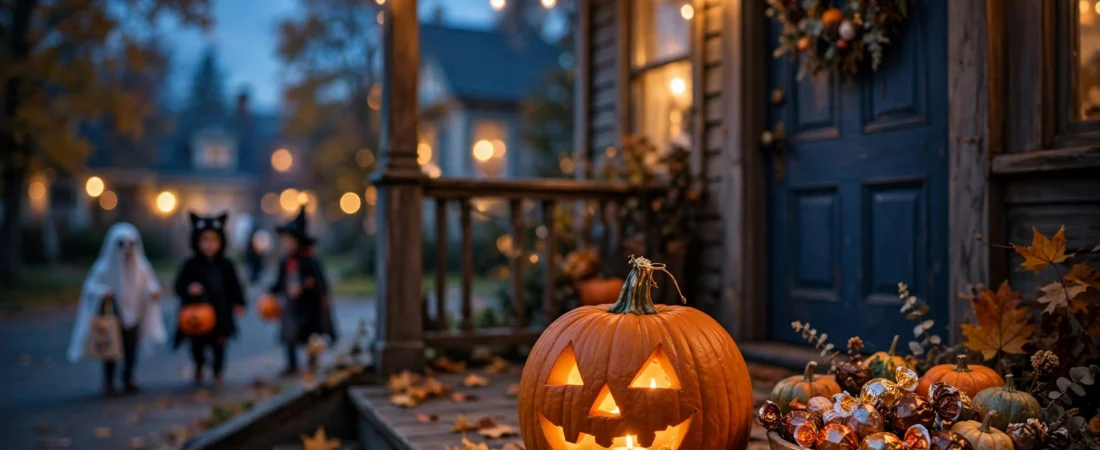
Halloween 2027 falls on Sunday 31 October 2027. If you’re wondering how many days until Halloween 2027, the live countdown at the top of this page is ticking down to that Sunday night, second by second.
It’s a Sunday Halloween, rarer than you’d think — the last one was in 2021, and after 2027 you won’t get another until 2032. A Sunday changes when the parties happen, when trick-or-treating starts, and how much sleep everyone gets before Monday morning. Here’s the date, why it plays out differently, where the holiday actually comes from, and how to plan for it without the usual last-week panic.
So, when exactly is Halloween 2027?
Sunday 31 October 2027. Halloween never moves — it’s always 31 October — but the day of the week shuffles every year, and 2027 hands it a Sunday. The day after, Monday 1 November, is All Saints’ Day, the feast that gave Halloween its name.
The timer on this page counts down to midnight at the start of 31 October. And if you want a countdown for something more specific — a party, a costume deadline, the night the pumpkins go out — our free countdown timer lets you set any date and watch it tick down live.
A Sunday Halloween changes the night
Here’s the thing about a Sunday Halloween: the main event lands on a school night. That sounds like a small detail until you’re the one deciding whether your eight-year-old can stay out until 8:30 on a night before school.
Most neighbourhoods handle it the same way they did in 2021, the last Sunday Halloween. Trick-or-treating still happens on the 31st itself — nobody moves Halloween — but it starts earlier and wraps up earlier. Expect the first knocks around 5:30 or 6 in the evening, with the bulk of the action done by 8:30. The little kids go out first, the older ones later, and by 9 most porches have their lights off. Last year, Halloween 2026 fell on a Saturday, so the whole night ran later — the Sunday timing is the one change that catches people out.
The parties, though, drift to the weekend before. Friday 29 and Saturday 30 October 2027 are when the adult parties, the haunted houses and the pub crawls will pack in, because nobody wants to nurse a hangover into a Monday. If you’re planning a party, book the Saturday — the best ones sell out that weekend rather than on the night itself.
Because Halloween falls on a Sunday in 2027, the whole weekend becomes a three-day stretch: parties Friday and Saturday, the real thing Sunday, then All Saints’ Day on Monday. Just remember the Monday is a normal working day in most places, not a holiday.
Where Halloween actually comes from
Halloween looks like one holiday, but it’s really three or four traditions tangled together over about two thousand years.
The oldest strand is Samhain (pronounced “sow-in”), the Gaelic festival that marked the end of the harvest and the start of winter. In Ireland and Scotland, 1 November was the traditional start of the cold half of the year, and the night before was treated as a boundary night, when the line between the living and the dead was thought to thin out. Bonfires were lit, and people wore disguises. How much of modern Halloween descends directly from Samhain is still argued over by historians — some of the “Celtic New Year” framing comes from Victorian scholars rather than surviving ancient records.
The name itself is Christian. In the 8th century, Pope Gregory III fixed 1 November as All Saints’ Day — All Hallows’ Day — and the evening before became All Hallows’ Eve, which shortened over time to Halloween. The two traditions sat on the same date and gradually merged.
Trick-or-treating has its own separate ancestry. In medieval Britain and Ireland, poor people and children went door to door around All Saints’ and All Souls’ Day in a custom called souling, offering to pray for a household’s dead relatives in exchange for small cakes. In Scotland and Ireland, a related custom called guising had young people in disguise performing a song or a trick at each door for food or coins. Both customs crossed the Atlantic with Irish and Scottish immigrants in the 1800s, and over the early 20th century they fused into the door-to-door candy collecting we know now. The phrase itself is Canadian, as far as anyone can tell: a 1917 Ontario newspaper reported kids shouting “tricks or treats,” and the exact words “trick or treat” turn up in a 1927 report from Alberta.
And the pumpkin? That one’s Irish folklore too. The story goes that a trickster called Stingy Jack outwitted the Devil and ended up wandering the earth with only a burning ember for light, which he carried in a hollowed-out turnip. Irish and Scottish families carved turnips as lanterns. When they emigrated to North America, turnips were scarce and pumpkins were everywhere — bigger, softer, easier to carve — so the pumpkin took over. The turnip version still shows up in parts of Ireland and Scotland, but once you’ve tried carving one, you’ll understand why the pumpkin won.
Somewhere along the way it turned into serious business: Americans were expected to spend a record $13.1 billion on Halloween in 2025, according to the National Retail Federation, up from $11.6 billion in 2024 — mostly on costumes, candy and decorations.
Halloween isn’t the same everywhere
If you grew up with the American version, it’s easy to assume Halloween works the same way worldwide. It doesn’t.
In the United States and Canada, Halloween is mostly a children’s holiday built around trick-or-treating, plus a huge adult party scene. The US goes biggest: whole streets compete over decorations and haunted houses open for weeks.
In Ireland and Scotland, the older customs are still visible. Guising survives in some areas, with children expected to perform something — a song, a joke, a poem — before they get their treat. Barmbrack, a fruit loaf with small charms baked inside, is a traditional Halloween food in Ireland: whatever charm you find in your slice is supposed to predict your year ahead.
Mexico’s Día de los Muertos, the Day of the Dead, falls on 1–2 November, right after Halloween, and the two get confused a lot. They’re distinct holidays. Día de los Muertos is a family-centred remembrance of the dead, with ofrendas (altars), marigolds and sugar skulls — joyful rather than spooky, and rooted in Indigenous Mexican tradition blended with Catholic All Saints’ and All Souls’ Days.
England has its own wrinkle: Halloween has grown fast there, but 5 November — Bonfire Night — sits just five days later and still dominates the fireworks calendar. In 2027 they stack into one long spooky week.
Australia does Halloween in spring, since October is the southern hemisphere’s spring. It’s smaller than in the US — trick-or-treating exists but isn’t universal. The weather, at least, is kinder: warm evenings and outdoor parties instead of coats over costumes.
Planning Halloween 2027 without the last-minute panic
The single best thing about a Halloween this far away is that you can plan it slowly. Here’s a timeline that works, based on when things sell out and go stale.
Costumes first. If you’re buying a popular costume — whatever the year’s big film or TV character turns out to be — the good sizes start disappearing in early October, and the best ones go in September. Homemade costumes need time instead: start gathering materials by late September, and aim to have the thing wearable by the weekend of 23–24 October so there’s time to fix whatever doesn’t fit.
Pumpkins have a hard deadline built in. A carved pumpkin lasts about three to five days before it starts collapsing, faster if it’s warm — so carving on the weekend of 23–24 October is too early. Carve on Thursday 28 or Friday 29 October instead, keep it out of direct sun, and rub the cut edges with a little vegetable oil to slow the drying. Uncarved pumpkins last weeks, so buy those whenever you like.
Party invitations should go out by mid-October at the latest, and earlier if you’re booking a venue or a caterer. If you’re hosting on Saturday 30 October, you’re competing with every other party that weekend, so give people a date to hold as soon as you know it. Hosting on the Sunday itself? Keep it early — a 4–7 pm window lets families come before trick-or-treating and still get home.
Candy is the one thing you can buy absurdly early. It keeps for months, goes on sale in September, and buying it in October means you’re not fighting the crowds on the 30th. Buy more than you think you need — the unopened bags keep until next year, and running out at 7 pm with a queue at the door is worse than having leftovers.
For trick-or-treating with kids, the Sunday timing calls for a bit of discipline. Monday is a school day, so treat it like a school night with a later bedtime: out early, home by 8, and sort the candy haul after showers, not before. On the night itself: reflective tape on dark costumes, a torch for each child, and a rule that nobody eats anything until an adult has checked it.
How to use the live countdown
The countdown at the top of this page runs until midnight on 31 October 2027, updating every second. It’s the simplest way to answer “how many days until Halloween 2027” without doing the subtraction yourself.
If you want a countdown for something more specific — a party on Saturday 30 October, a costume deadline, the night you carve the pumpkins — the free countdown timer on our site lets you set any date and time you like.
Frequently asked questions
What day of the week is Halloween 2027?
Sunday 31 October 2027. It’s the first Sunday Halloween since 2021, and the next one after that won’t come until 2032.
Is Halloween 2027 a public holiday?
No, not in most countries. Halloween isn’t a public holiday in the United States, the United Kingdom, Canada or Australia. The day after, Monday 1 November, is All Saints’ Day, which is a public holiday in some Catholic countries — France, Spain, Italy and parts of Germany among them — but not in the UK or the US.
When should I carve my pumpkin for Halloween 2027?
Carve it on Thursday 28 or Friday 29 October. A carved pumpkin only lasts about three to five days, so carving it the weekend before means it’ll be sagging by the 31st. Keep it cool and out of direct sun.
Will trick-or-treating happen on Sunday 31 October 2027, or will it move to Saturday?
It happens on the 31st itself — Halloween doesn’t move. Expect earlier hours than a Friday or Saturday Halloween, roughly 5:30 to 8:30 in the evening in most neighbourhoods, with the youngest children out first.
How is Halloween different from Día de los Muertos?
They’re separate holidays that happen to sit next to each other. Halloween is 31 October; Día de los Muertos is 1–2 November, a Mexican tradition of remembering deceased family members with altars, marigolds and offerings — joyful and family-centred rather than spooky. Many people in Mexico celebrate both.
What was the last Sunday Halloween before 2027?
Halloween fell on a Sunday in 2021. Before that, 2010. After 2027, the next Sunday Halloween is 2032.
The short version
Halloween 2027 is Sunday 31 October — a Sunday Halloween, the first since 2021, with parties spilling onto the Friday and Saturday before and trick-or-treating wrapping up earlier than usual on the night itself. The countdown above is already running, and the best move is the boring one: sort the costume in September, carve the pumpkin on the 28th or 29th, and buy the candy before the shelves empty. If you want to keep an eye on the wait, our free countdown timer will count it down to the second.