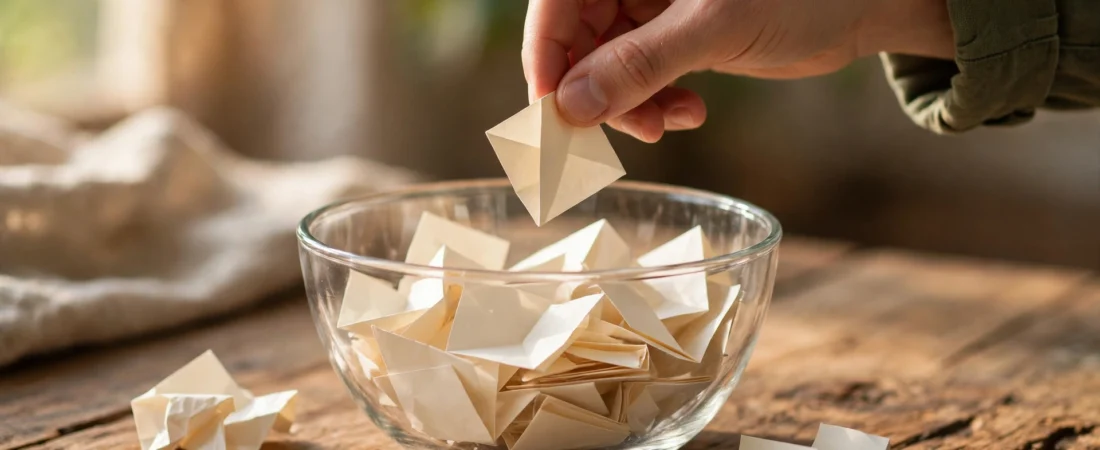
You promised a prize, the comments flooded in, and now 214 people are watching to see whose name comes out. That’s the awkward part of running a giveaway nobody talks about beforehand: picking a winner isn’t hard, but picking one in a way everyone trusts takes a bit of care. Get it wrong and even an honest draw looks rigged. Get it right and the whole thing ends with people asking when the next one is.
Here’s how to pick a random winner for a giveaway so the result is fair, provable, and painless to announce — whether you’ve got 20 entries or 2,000.
Write the rules down before anyone enters
Most giveaway arguments start with a rule that was never written down. Someone entered twice and wants both entries counted. Someone in another country won and shipping costs more than the prize. Someone claims the draw closed “whenever you felt like it”. All of it is avoidable if the rules exist before the first entry lands.
Keep them short, but cover the bits people actually argue about: who can enter (age, country, whether they need to follow you), how to enter (comment, tag a friend, sign up — pick one clear method), how many entries each person gets, and the exact closing time with a timezone. “Friday at 6 pm” means nothing to an audience spread across time zones; “Friday 31 October, 6 pm IST” does.
Two more lines save you a headache later. First, say when and where you’ll announce the winner — within 48 hours of closing is a good target, and people stop refreshing your page if they know when to check back. Second, set a claim window up front, usually five to seven days. If the winner doesn’t reply in that window, you move to a runner-up, and nobody can call that unfair because it was in the rules from day one.
Pin those rules in the post caption or the signup form, not in a reply buried three screens down. When a question comes up, you want one link to point to.
Build one clean list, and clean it before the draw
Once entries close, gather every valid entry into a single list, one name or username per line. How you collect them depends on the platform — comments under a post, a form export, a spreadsheet of subscribers — but the list itself should look the same at the end: one row per entry, nothing else.
This is where most draws quietly go wrong. The same person commented four times, so they appear four times. Two entrants share a first name, so you can’t tell them apart later. A handful of entries came from accounts that never followed the rules at all. If your rules say one entry per person, collapse duplicates now so each person appears exactly once. If your rules allow multiple entries — say, one per comment — keep them, but know that each extra row is an extra chance, and that’s a choice you made on purpose, not an accident.
Use usernames or email addresses as the identifier, not first names. Two people called Alex in a list of 200 is not a hypothetical; it’s a certainty, and it’s miserable to sort out after the draw when the winner’s identity is ambiguous.
And filter before you draw, not after. Drawing first and then disqualifying the winner in public is the worst version of this process — it looks like you changed the rules because you didn’t like the result. Quietly removing ineligible entries from the pool beforehand avoids that entirely, and it’s also the honest order of operations: the draw should only ever contain people who could legitimately win.
Draw it where people can see it
A fair draw that nobody saw is only half a draw. Your audience can’t tell the difference between a genuinely random pick and a name you chose because you liked their comment, unless you show your working.
The simplest credible method: paste your clean list into a random name picker and run the draw on camera, or screen-record it. An animated draw — a wheel spinning, names cycling, one name landing — does something a spreadsheet formula can’t: it lets everyone watch chance do its job. Screenshot the result the moment it lands, because that screenshot becomes your proof when you announce.
If you’re giving away more than one prize, use the picker’s elimination mode: each winner is removed from the pool before the next spin, so nobody wins twice. And draw your runners-up at the same time, from the same pool, in the same recording. Picking two or three backups now means a no-reply winner doesn’t force you to run a second, less convincing draw a week later. Just don’t announce the runners-up as winners — keep them as your quiet backup list until you need them.
For a classroom-sized draw the same approach works, and if you regularly run draws for a class or a team, our guide to the best random name pickers for teachers compares the free options side by side.
What counts as random, and what doesn’t
Not every method that feels random actually is. Picking the “best” comment is a judging contest, not a draw, and it should be labelled as one. Picking the first comment, the last comment, or the comment with the most likes all favour whoever got there earliest or loudest. Counting down a list of likes by hand works for a dozen entries and falls apart at a hundred, because the counting itself becomes the weak point — one miscount and the wrong person wins, with no record to check.
A proper random draw gives every entry in the cleaned pool exactly the same chance, with no weighting for when they entered, how active their account is, or whether you recognise the name. Tools that shuffle the list or pick with a proper random source do this; your gut doesn’t, even when you’re trying to be fair. That’s not a criticism — human brains are terrible at randomness, and they pattern-match without asking permission. The tool exists precisely so you don’t have to trust your own impartiality.
One honest caveat: a name picker can only draw from the list you give it. If your list is messy, duplicated, or missing entries, the draw inherits the mess. Fairness lives in the list preparation as much as in the spin.
Match the method to where the entries live
Instagram comments, YouTube comments, email signups, and form entries all need slightly different handling, but the principle stays the same: get every valid entry into one list, then draw from that list once.
For comment-based giveaways, export or copy the commenters rather than scrolling and counting by eye. Scrolling misses people, double-counts the enthusiastic ones, and leaves you with no record. For email or form giveaways, export the entries to a spreadsheet first, strip out test entries and duplicates, then paste the clean list into the picker. If entries came from two places — say, a form and a post — merge them into one list before drawing, or you’ll end up running two draws and explaining why one pool was luckier than the other.
Skill-based contests are a different animal and shouldn’t be drawn at random at all. If the prize goes to the best photo, caption, or recipe, say so, publish the judging criteria, and judge against them. Mixing the two — calling something a random giveaway and then picking the entry you liked best — is how trust evaporates.
When you’re ready to run the actual draw, try our free random name picker: paste your list, turn on elimination mode if you have multiple prizes, and spin. It takes about a minute, and the animated draw doubles as the recording you can share as proof.
After the draw: verify, announce, and mind the details
Before you announce anything, check the winner against your own rules one last time. Did they meet the entry conditions? Are they in an eligible country? Is the account real rather than a giveaway-only bot profile created yesterday? A two-minute check now beats a public retraction later.
Announce in the same place you ran the giveaway, with the screenshot or clip of the draw attached. A short post works: the winner’s username, the number of valid entries, the method you used, and the claim deadline. That one paragraph answers almost every question before it’s asked, and it gives the entrants who didn’t win something to look at besides silence.
Contact the winner privately to arrange delivery — never in a public comment thread, and never by asking for passwords, payment, or bank details. Real prize delivery doesn’t need any of those, and scammers love to impersonate giveaway hosts in the comments, so warn your audience that you’ll only ever contact the winner from your official account. Give the winner the claim window you promised, send one polite follow-up after a couple of days if you haven’t heard back, and if the deadline passes, move to your first runner-up and note the change in the same announcement thread.
Finally, delete or securely store the entry list once the giveaway is done, especially if it contains email addresses. An export sitting on a laptop is a small privacy risk that serves no purpose after the prizes are claimed.
Frequently asked questions
What’s the fairest way to pick a giveaway winner?
Clean your entries into one list, remove duplicates and ineligible entries, then draw with a random name picker on camera or screen-recorded. The visible draw is what turns a fair process into a believable one.
How do I stop one person entering ten times?
Decide the rule before launch — usually one entry per person — then collapse duplicate usernames or email addresses to a single row before drawing. If extra entries are allowed, say how they’re earned, so the advantage is out in the open.
Should I draw runners-up at the same time?
Yes. Draw two or three backups in the same recorded session, from the same cleaned pool. If the winner doesn’t claim the prize within your stated window, you already have a legitimate next name.
Can I just use a random number generator?
You can, if your entries are numbered in order and you record the number you generated. It works, but it’s harder to show an audience than an animated name draw, and counting down a long list by hand invites errors.
What if the winner doesn’t reply?
Wait out the claim window you published (five to seven days is standard), send one follow-up, then offer the prize to your first runner-up and update your announcement. Never extend the window quietly for one person and not others.
Do I need to worry about platform rules?
Yes, briefly. Most platforms require a line stating the giveaway isn’t sponsored by or affiliated with them, and some restrict how you can ask people to enter (for example, tagging or sharing requirements vary). Check the platform’s promotion rules before you launch, not after.
The short version
Write the rules first, build one clean list, filter it before you draw, and draw it somewhere your audience can see. That’s the whole method — everything else is just handling the announcement well and giving the winner a fair window to claim the prize. If you want the draw itself done in about a minute, try our free random name picker and screen-record the spin. And if you’ve run classroom draws before and want the fuller comparison, our earlier guide on drawing a fair winner from any list covers the same method in more depth.